

On the green hills of South Ari District, located in Ari Zone of the South Ethiopia Regional State, a group of ten young people formed enterprise that would soon become a source of hope and pride for their community. Among them were two remarkable young persons with disabilities whose determination and teamwork reshaped how others viewed ability, opportunity and inclusion. They were participants of the Youth Self Employment in South Ethiopia Region (YES) Project, which is being implemented by the Hailemariam & Roman Foundation in partnership with the Mastercard Foundation. The project aims to create livelihood opportunities through training, enterprise development and access to resources.
Taye Buyo, a 29-year-old young man from Chelegod Village, lived with visual impairment since childhood and attended a special needs primary school, which he dropped out due to unfavorable conditions impeding him to pursue his education. Taye helps his parents cultivate maize and groundnut on a shared plot which is main source of income is small scale farming. The family’s income was so modest and often gets thinner when it trickles down to the extended relatives as it is customary to share proceeds with close/far relatives of a family.

When Taye heard about the YES project, he joined with hope of improving his livelihood. After the first round of training, which focused on mindset transformation and basic business skills, he gained confidence to participate in a demand driven training programs suited to his condition. He chose beekeeping, believing it would be a sustainable and manageable business for a person with visual impairment.
The demand driven training introduced Taye to modern apiculture techniques such as proper hive placement away from noise and market areas, and the importance of positioning hives at moderate heights for easy access. Inspired by the knowledge he acquired, he and fellow nine members of the enterprise organized by the project began savings from their small prior earnings. Each member deposited a 100 Ethiopian Birr every week, amounting to 1,000 Birr weekly. Within a few months, they accumulated 20,000 Birr and invested on 18 hives, blending modern and traditional types. For Taye, every step of his journey not only brought about a noticeable financial growth, but also was a proof of his capability to do something great, be part of a teamwork, and realization of the value of inclusive economic participation.
In the same enterprise another dedicated member, Worku Ango, 32 years a 32-year-old young married man who partially lost functions of his left hand fingers after a fatal motorbike accident four years earlier. As the man of the house who brings bread and butter to his family and his parents as well, Worku heavily relied on farming for his earnings. The injury, however, made it increasingly difficult for him to manage heavy farm labor anymore.
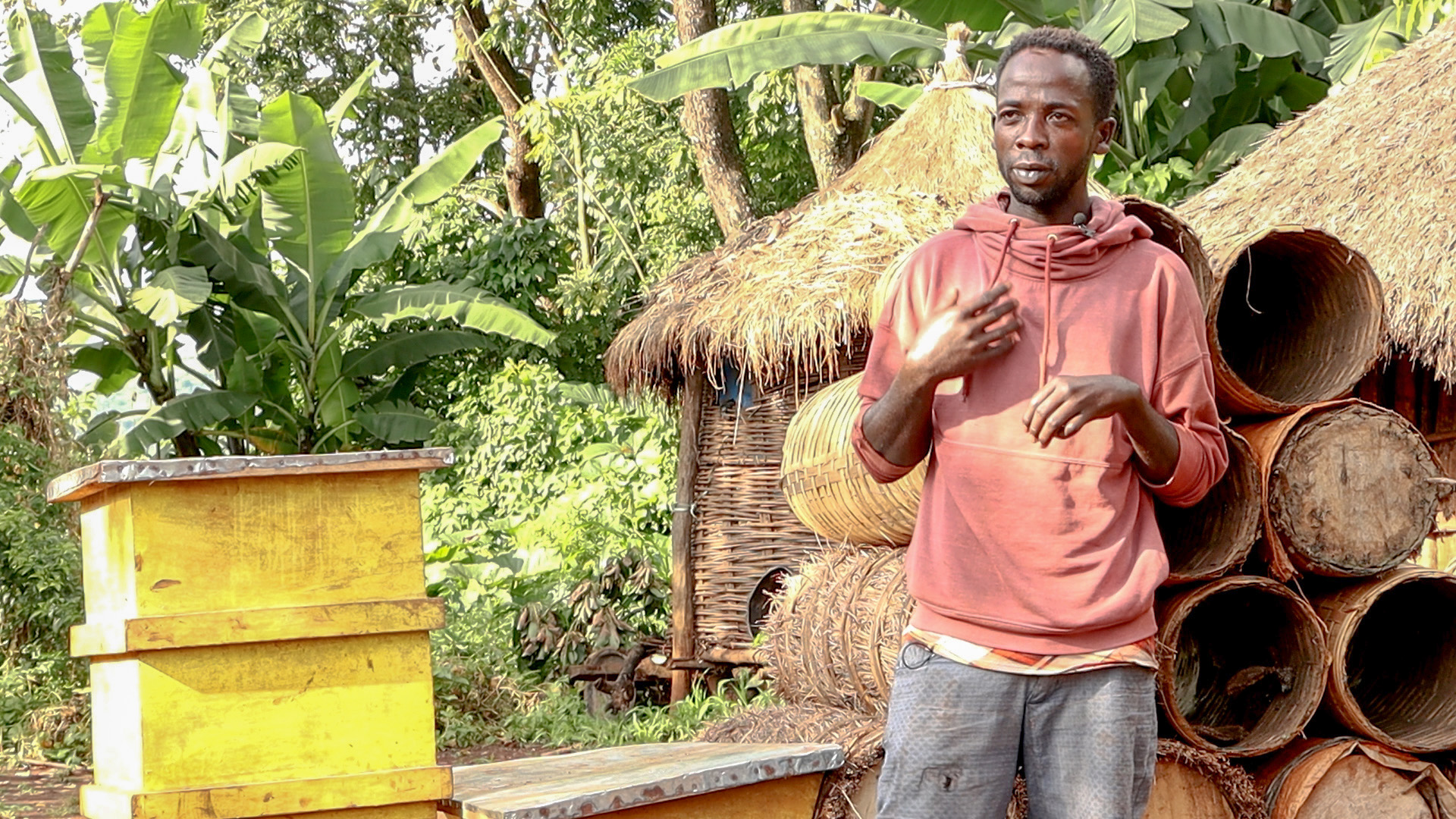
When the YES project reached his community through the local government, he attended the mindset transformation and basis business skill sets training sessions whereby he gained the knowledge and skills that made him think in a new direction and be part of a business enterprise of his choice. Initially, he was uncertain which business sector to choose. Following consultations with his peers, he got encouraged be part of the “Taye and others” apiculture enterprise group.
During the Demand Driven Training sessions, Worku acquired new skills like modernization of traditional hives for better quality and production, safe handling and mixing of bee colonies and how to capture the main queen bee during hive establishment, to mention a few. Together with his enterprise members, he prepared two hives in the nearby forest, ready to apply what they had learned. Despite challenges such as limited access to land and finance, the group remained determined and submitted an application to their village administration enquiring for a work space. They also planned to have access to small loans or grants from local banks and/or donors to expand their work.
Although the enterprise is just taking off, it now stands as a model of inclusion and resilience. The two young men, Taye and Worku, have shown that disability is not inability, and that with the right support, training, and cooperation, every person can contribute meaningfully to the development of their local communities and the nation at large.


