In the heart of Key Afer Village, Bena Tsemay District lives Allo Lale, a 35-year-old agro pastoral mother of five whose determination has transformed not only her life but also the mindset of her community.
Five years ago, Allo’s household relied solely on her husband’s modest income as a gatekeeper at a local FM Radio Station, a salary too small to sustain their family. “The shortage of money was a dragging factor that pushed me out to search for something to generate income,” she recalls. Poverty was the enemy she fought every day.
Breaking Barriers & Defying Social Norms
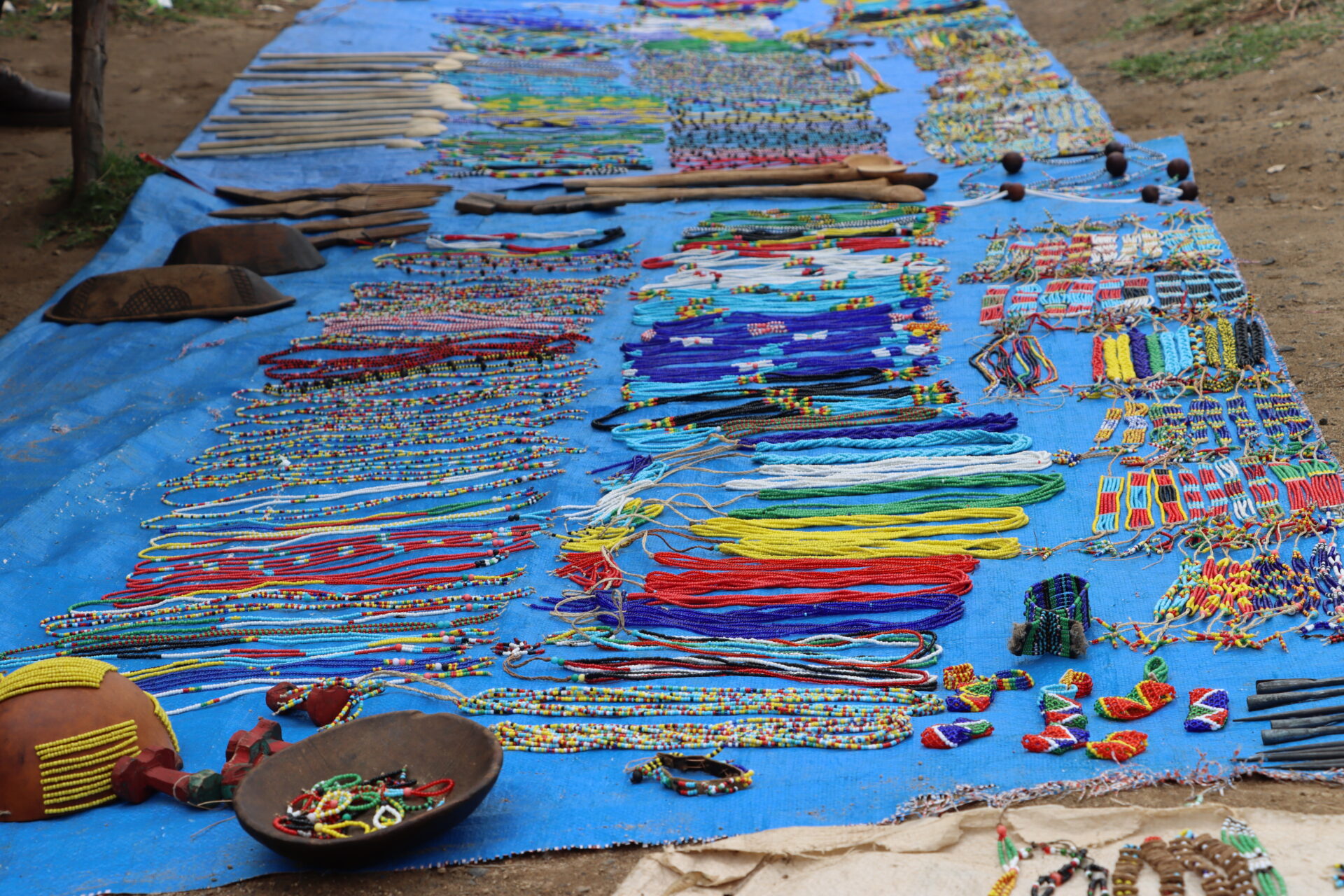
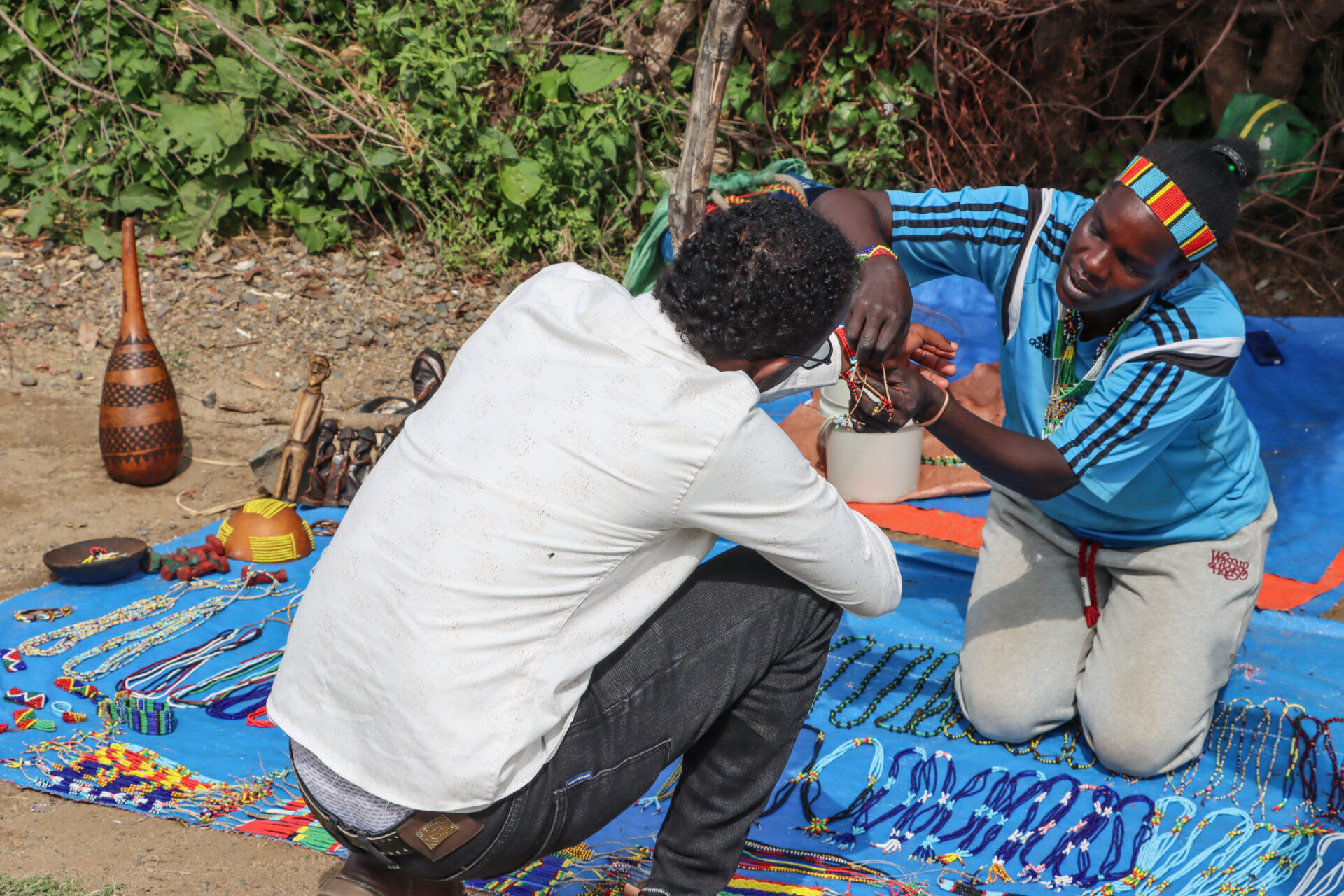
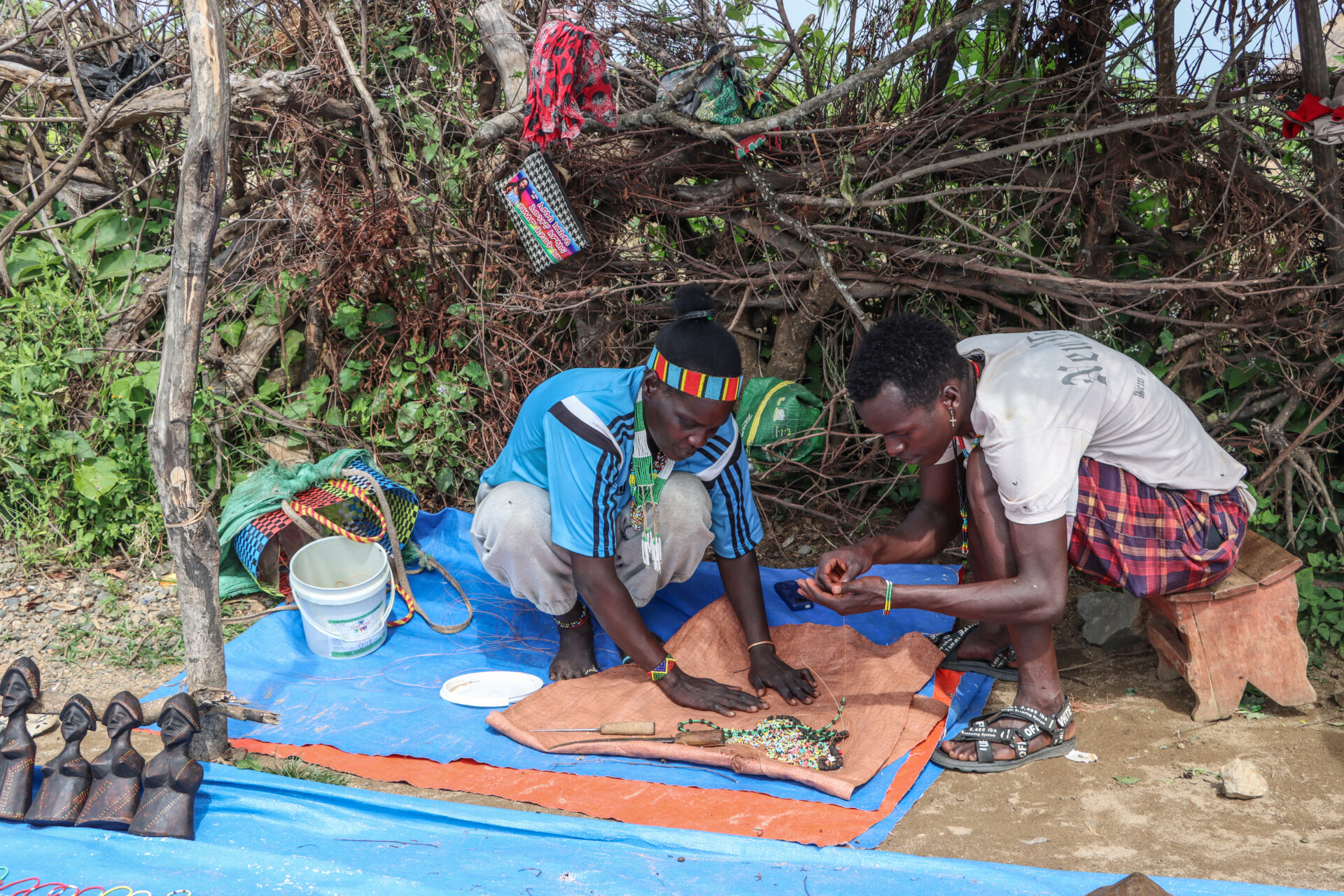
Determined to change her family’s situation, Allo began selling handmade local utensils to tourists traveling toward Hamer, one of South Omo’s most visited cultural and tourist destinations famous for its unique traditions and handicrafts. With the little she earned, she bought materials to create souvenirs such as beadworks and small crafts, which she sold along the roadside near the high way.

But stepping into public work was not welcomed. “I was the first woman in my community to sit on the street and sell souvenirs,” Allo says. “People said I was idle and had no home responsibilities.” In her community, women were expected to stay indoors, tending to household chores. Still, Allo continued, and soon, the income she generated surpassed her husband’s earnings, enabling her to send her children to school and provide them proper meals.
A Turning Point with the YES Project
When the Youth Self Employment in Southern Ethiopia (YES) Project, implemented by the Hailemariam & Roman Foundation (HRF) in partnership with the Mastercard Foundation, launched in her Village last year, local officials identified Allo as a strong candidate. They explained that by joining, she could receive skill training, business development support and access to finance to scale up her work.
“I was so happy,” she recalls. “Before, I had no opportunity to request a proper place to work and no capital. The project gave me hope.”
Through the project, Allo participated in two types of training: mindset and business skills, and a five-day demand driven training program on souvenir production. These trainings, aligned with the YES Project’s Youth in Work and Ecotourism Development components, helped participants develop entrepreneurial thinking, creativity, and product diversification.
“The training opened my mind. I learned to design new souvenirs inspired by the Omo Valley’s rich culture, combining beads, wood, clay and jewelry from local materials,” she explains. “Now, when I go to the forest to collect wood or mud, my mind is full of ideas of what I can create.”
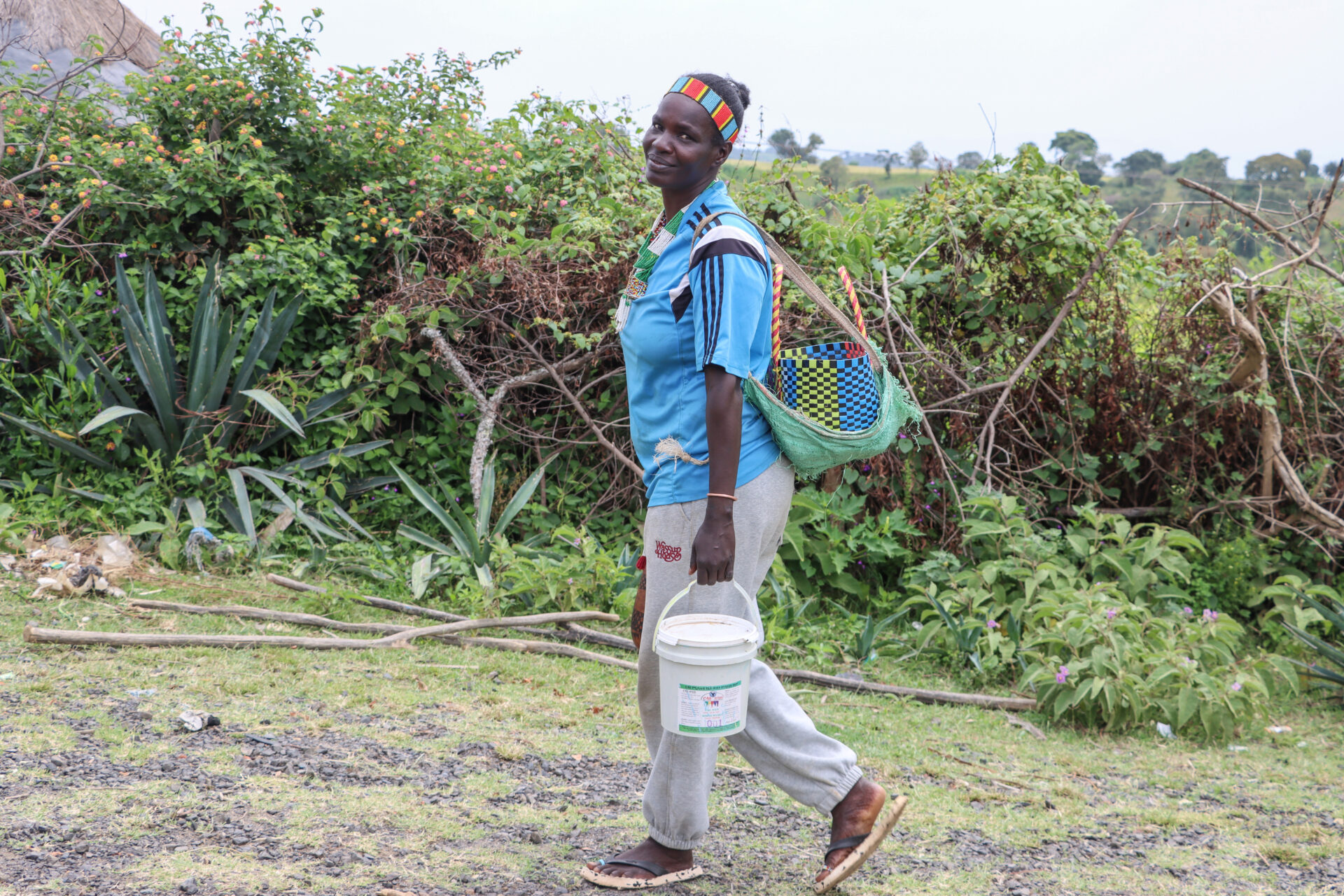
Today, Allo earns between 1500 and 5000 ETB per day, a remarkable leap from her early struggles. Her story also inspired others. “Many who once criticized me have now joined souvenir training,” she says with a proud smile.
Allo is now a founding member of the Wosana Kinka Wedhabe Souvenir Enterprise, a name that means Let’s Rise Fast in the local Bena language. The enterprise, formed through the YES Project, brings together 11 members, six of whom are young women. Together, they save a portion of their earnings and produce souvenirs for tourists visiting Key Afer and nearby destinations.
One of Allo’s sons, a grade 12 graduate, has also joined the enterprise. “He helps me craft and sells our products,” she says. “It makes me proud to work with my children.”
Challenges and Hopes for the Future
Despite her achievements, Allo & her coworkers still faces several practical and financial challenges that limit the growth of their business. Their current workspace is a small, open area beside an elderly woman’s fence, without shade or proper facilities to display their products. “When the sun is hot or the rain starts, we cannot continue our work,” she says. “We need a proper workspace where all our members can produce and sell comfortably.”
The enterprise members also struggle to secure a consistent supply of raw materials. Items such as goat and sheep skin, beads, and decorative threads are expensive and often have to be brought from distant markets. These costs reduce their profit margins and make it difficult to expand production. “Our business is growing, but our capital is not enough to match the demand,” Allo explains.
In response, the members have already approached the local administration to request a plot of land for a shaded workshop. They have also asked HRF to support them in linking with local financial institutions for small loans. “If we can secure a place and access to finance, our enterprise will be able to grow and showcase the rich culture of our people to visitors,” Allo adds with confidence.
Still, Allo remains hopeful. Her vision extends beyond her current stall. She dreams of opening a small village shop near the center of Key Afer, where she could sell a wider variety of souvenirs and household goods. She also hopes to create employment for other women and for her own children. “I want my family to be fully involved in our business,” she says.
Allo’s journey has made her a source of encouragement and pride for many women in her community. Once seen as idle for selling on the roadside, she is now admired as a role model of hard work and transformation. Her success has challenged long-standing social norms that confined women to household duties and opened new possibilities for others to follow.
She encourages other women and youth in her community to take advantage of opportunities like the YES Project and to trust in their own abilities. “We must commit ourselves to work with what is available,” she says.